
Summary
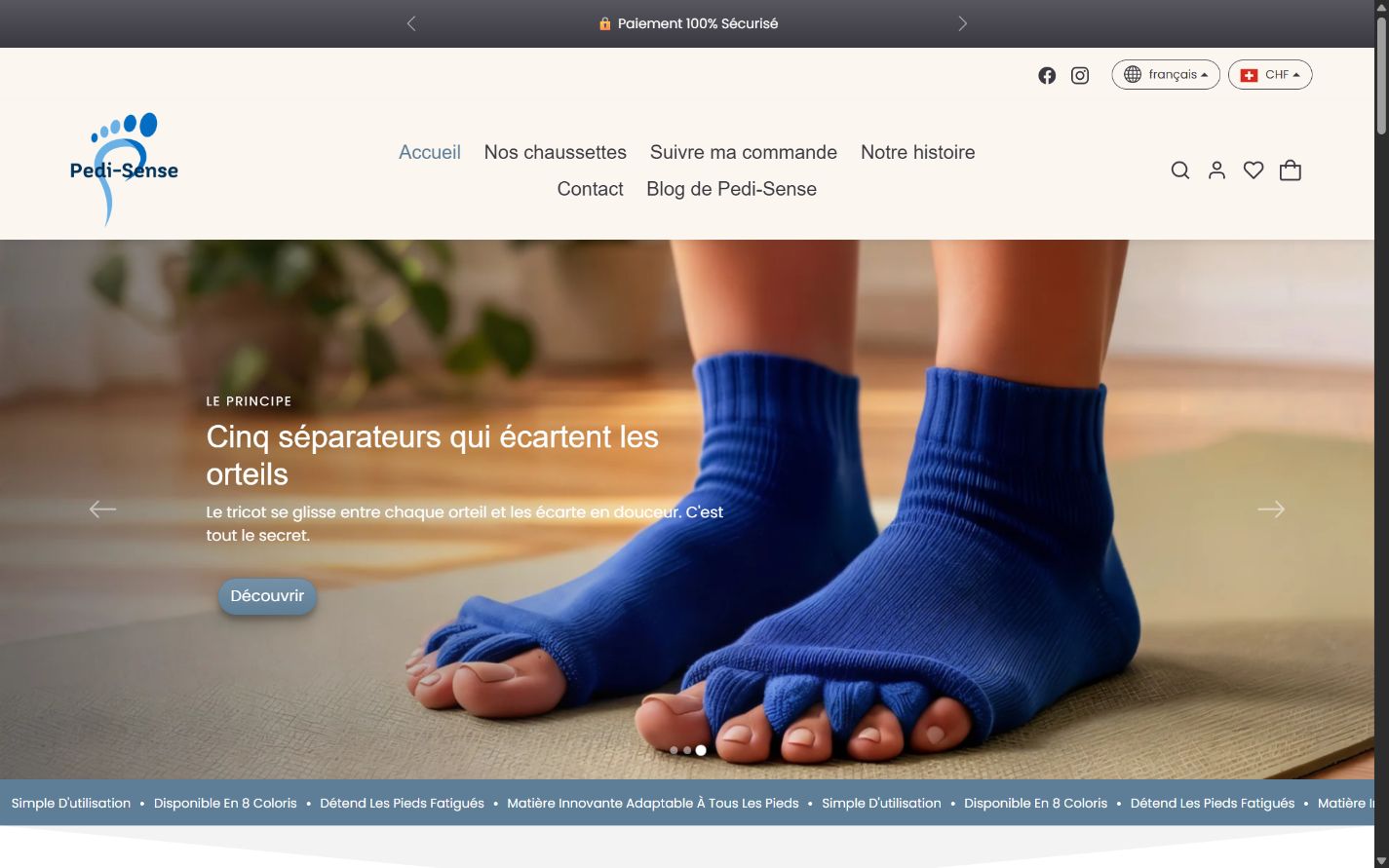
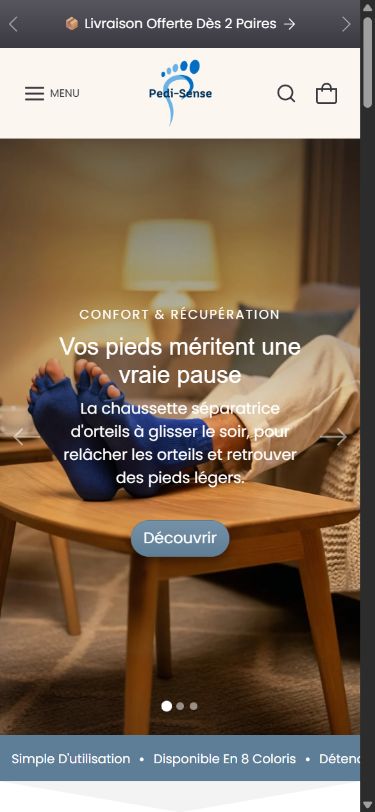
Pedi-Sense combines a Shopify storefront with custom services developed within Talos: customer support, email workflows and ecommerce event analysis. The work covers both the customer-facing store and the integrations behind it.
Role and scope
I designed and implemented the storefront, from theme composition and product options to localization, content and launch. I also developed the Pedi-Sense integrations within Talos, including customer-support workflows, branded emails and storefront event collection.
Problem and constraints
A focused catalogue needs enough structure for product variants, bundle options, practical information, customer support, localization, and editorial content without obscuring the purchase path.
Architecture
Shopify handles the catalogue, accounts, cart and checkout. Separate Talos services provide a multi-store support agent, connections to order and product information, email delivery through Listmonk, and event collection and attribution. Python services, Shopify APIs and MQTT connect these components.
Decisions and trade-offs
I kept checkout within Shopify while developing business workflows separately. Support includes draft responses for review and escalation to an operator. Email templates cover order confirmations, abandoned carts and shipping notifications.
Public results
The live store presents a complete purchase journey in French, English, German, Italian, and Spanish, with localized regions, currencies, product choices, customer information, and editorial content.
Resources and links
Explore the storefront and its case study. The Talos integrations use private source code.
Scope and current status
The store is online. Backend integrations have been developed; their current production activation has not been verified for this case study. This project covers software development, not an assessment of the product’s health benefits.